


Sengi facts
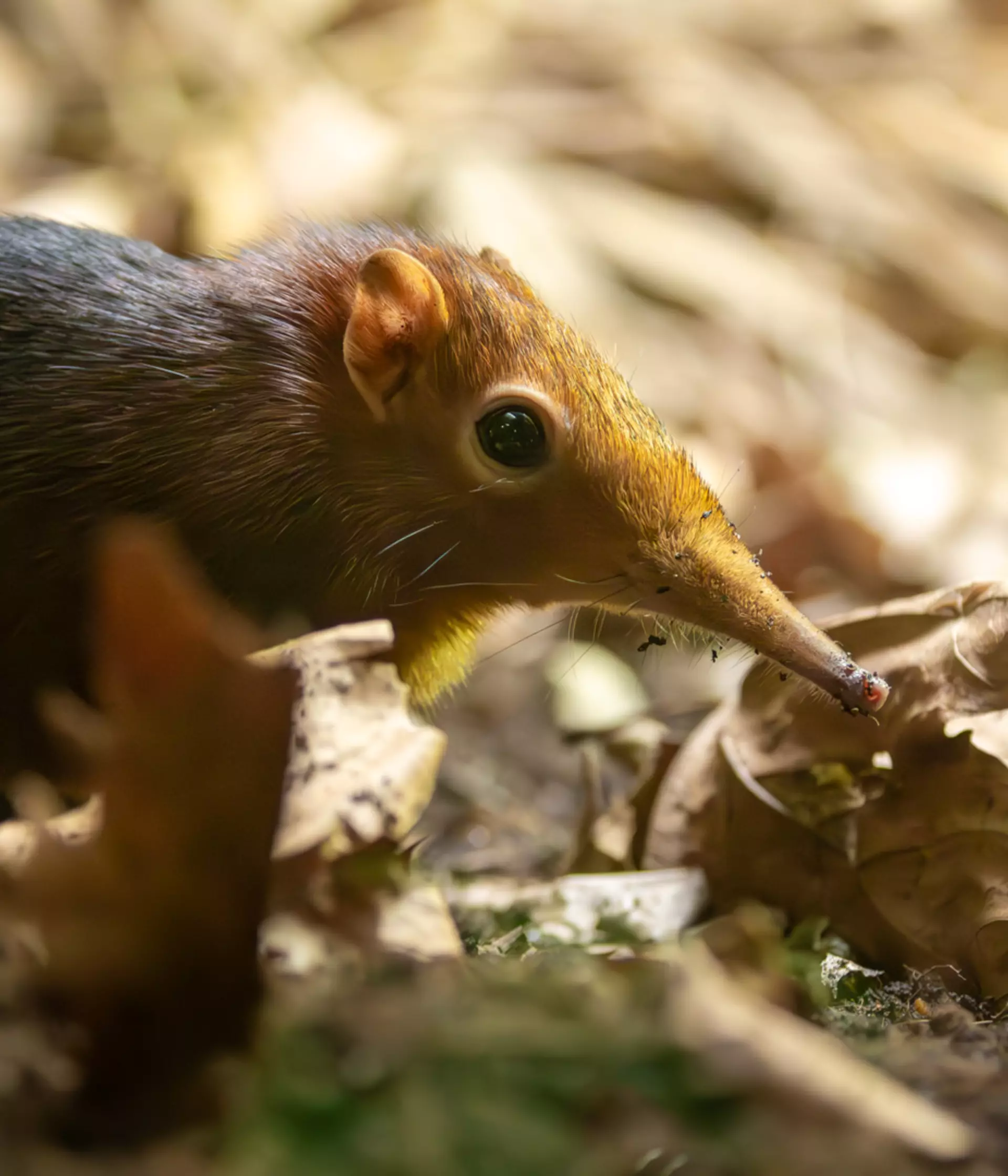
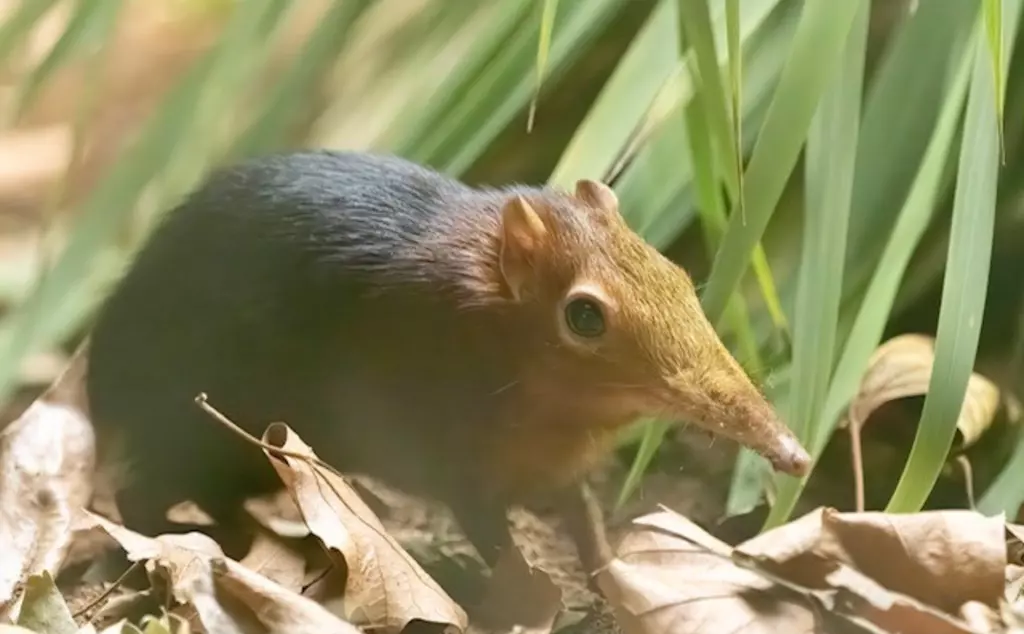
- The black and rufous sengi, also known as the black and rufous elephant shrew, is a small mammal endemic to central and Eastern Africa.
- Although they have ‘shrew’ in their name, they’re actually not closely related to shrews, and they’re not rodents either. They belong to their own family called Macroscelididae.
- The reference to ‘elephant’ is because they have a long nose, which is thought to resemble an elephant’s trunk. But they are also, surprisingly, more closely related to elephants than shrews!
- Sengis use their snout to dig through leaf litter in search of food, which aids nutrient turnover and supports plant growth, so they play an important role in their habitat and act as indicators of a healthy ecosystem.
Are there sengis at London Zoo?
London Zoo is home to two sengis in our Rainforest Life habitat, a male called Alf, and a female called Nadel. Head to the back of this area and you’ll spot them scurrying around their home.
What do black and rufous sengis look like and how big are they?
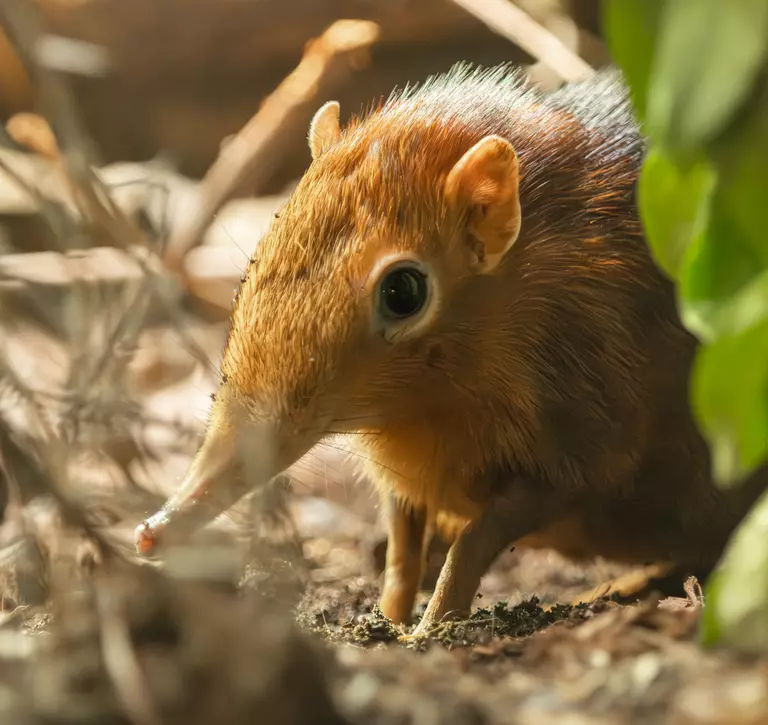
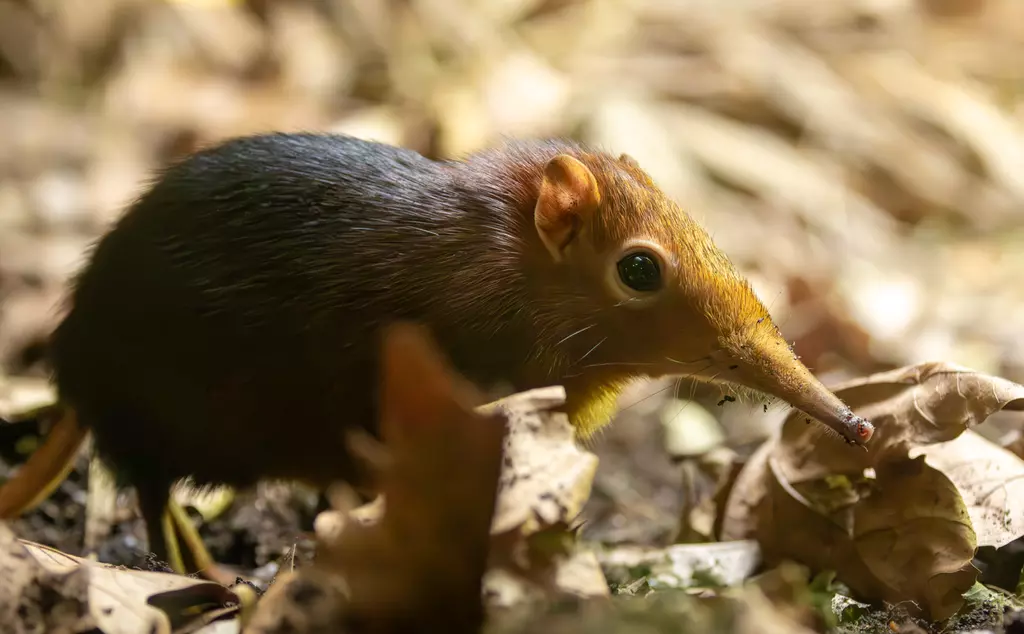
- The most noticeable feature of a sengi is the long, flexible snout, which gives them a powerful sense of smell and is used to dig through leaf litter on the ground to find food. They also have a long tongue to eat the invertebrates they find.
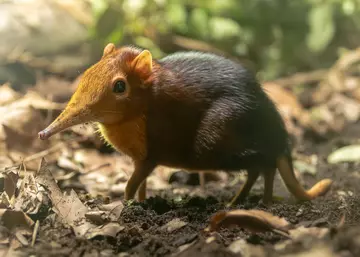
- Black and rufous sengis have a reddish colour fur on their heads and chests and black fur on their backs.
- They’re known to be quite skittish, and their hind limbs are much longer than the forelimbs, which helps them quickly run from predators.
- Their small size also helps them to hide more easily. An adult’s body can be up to about 28cm long, and the tail can reach around 25cm in length.
What do sengis eat?
Sengis eat invertebrates, like ants and termites, and they also eat fruit and seeds.
What threats do sengis face in the wild?
- Black and rufous sengis are listed as Least Concern on the IUCN Red List, but still face threats including habitat loss.
- Sengis are preyed upon by birds of prey like raptors, as well as snakes and sometimes humans.