
Facts about Southern Darwin’s frogs
- London Zoo is home to Southern Darwin's frogs - look out for them close to our Zoo Treats kiosk, on the way to the Outback area of the Zoo. Find them on our Zoo map.
- These tiny frogs have a remarkable parenting style. The male collects the fertilised eggs in his mouth and keeps the tadpoles safe in his vocal pouch until they are fully developed and emerge as froglets. This is unique among living frog species.
- These frogs are named after Charles Darwin, who first collected them.
What do Southern Darwin’s frogs look like?
Darwin’s frogs are so unique that they’ve been recognised as an EDGE species. This means that they’re considered to be Evolutionarily Distinct and Globally Endangered, and in urgent need of conservation action.
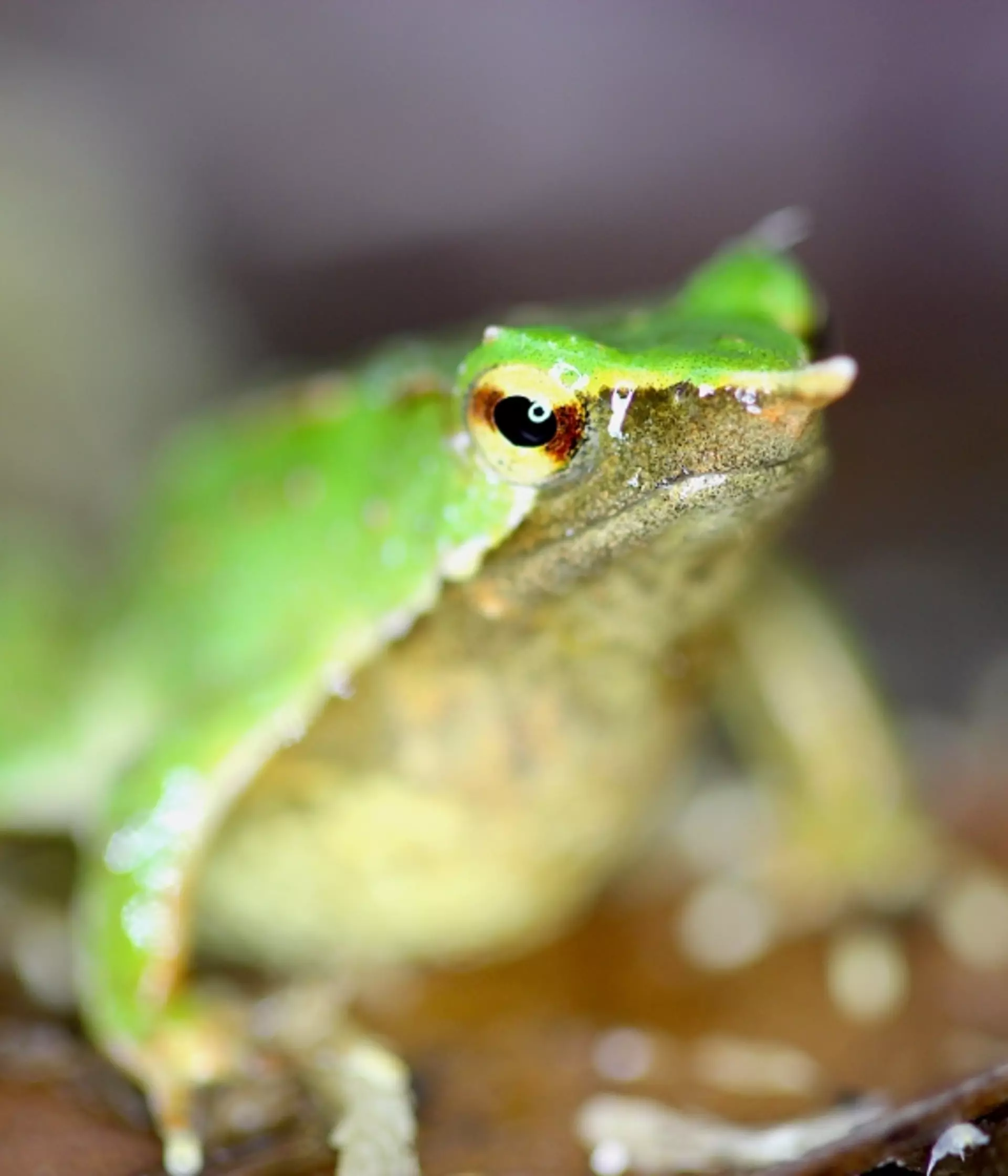
Unlike most frogs, they have pointed snouts and camouflaged skin. They’re also tiny – they weigh less than 2.0g and are under 3cm in size.
What do Southern Darwin’s frogs eat?
These frogs eat small insects and other small invertebrates.
Where do Southern Darwin’s frogs live?
These frogs are found in the damp, mossy undergrowth of temperate forests in Chile and Argentina. They were once widespread but are now confined to small, fragmented populations.
What threats do Southern Darwin’s frogs face?
Southern Darwin’s frogs are classified as Endangered in the wild on the IUCN Red List. Their populations are plummeting for two main reasons:
Chytrid
Amphibian chytridiomycosis has now affected at least 500 amphibian species, making it the most devastating infectious disease recognised by science. It disrupts the frogs' ability to breathe through their skin, often proving fatal.
Habitat loss
Logging, deforestation, and climate change are rapidly shrinking the temperate rainforests where these frogs live.
Unfortunately, their close relative, the northern Darwin’s frog, has not been seen since 1981 and is thought to be extinct. Protecting the southern Darwin’s frog is now more critical than ever.
Conservation of Southern Darwin’s frogs
At ZSL, we’re part of a huge collaborative project working with many partners, including Chilean conservationists, to restore key habitats, ensuring that future generations of Darwin’s frogs have a safe home in the wild.
We’re also breeding the frogs here at London Zoo to ensure there’s a genetically viable insurance population of the Endangered species.
In 2024, we carried out a momentous rescue expedition to locate frogs, undertake health checks, and bring them back to London to be cared for by our experts. The urgent rescue mission to protect the Southern Darwin's frog was documented in a film, 'A Leap of Hope'.
53 chytrid-free frogs completed the complex journey from Sothern Chile to London Zoo: a 6-hour boat ride, a 15-hour drive to Santiago, and a final flight to Heathrow, all in specially designed, climate-controlled transport boxes. All 53 frogs arrived safely and formed part of a vital breeding and research programme to save the species.
The following year, in 2025, 33 precious froglets were born – a huge milestone in the project and a vital step towards securing the future of the Southern Darwin’s frog.

Discover more frogs


The Secret Life of Reptiles and Amphibians
Hop around the world and experience some of the rarest and most unique reptiles and amphibians on Earth.