
Titicaca frog facts
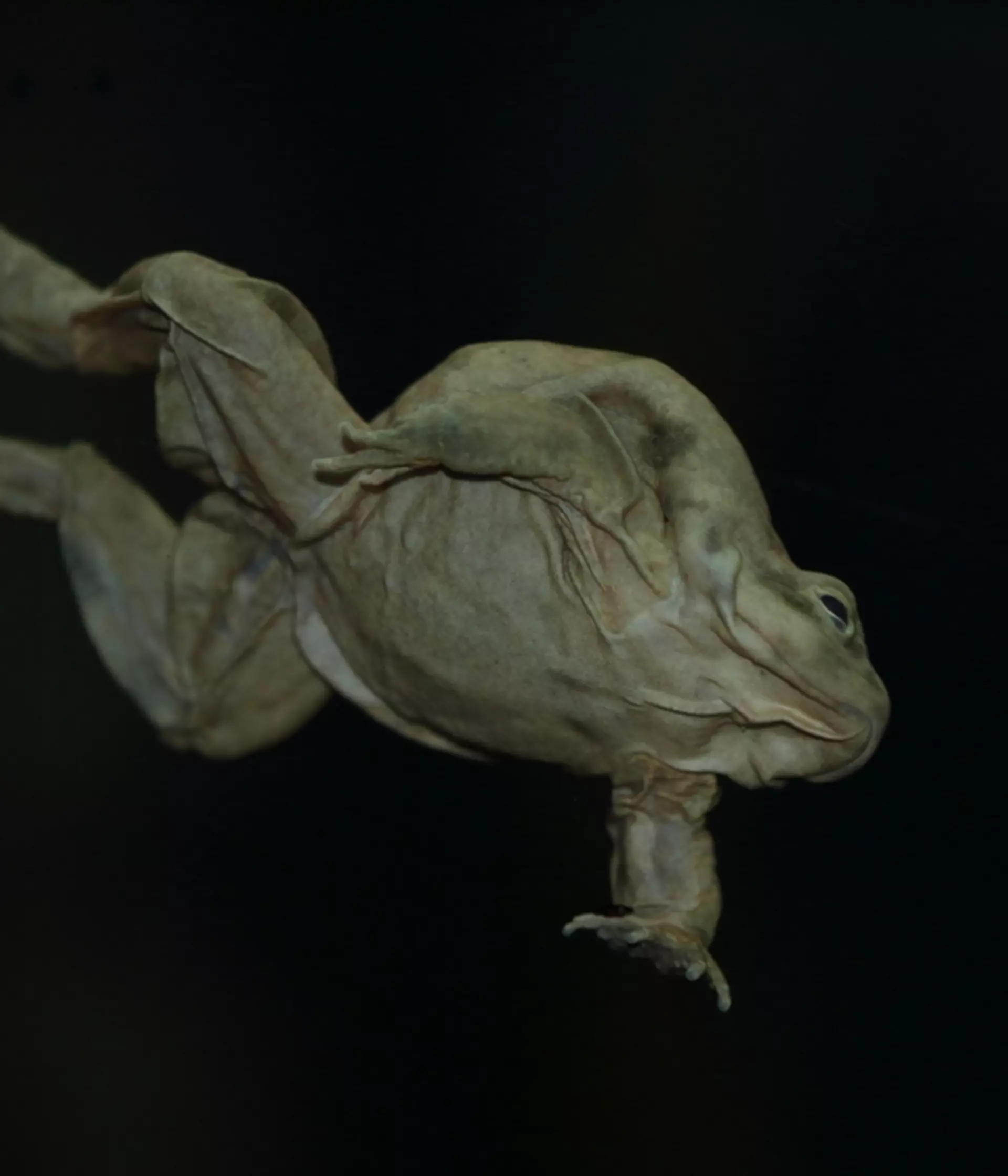
The Titicaca frog is the largest truly aquatic frog. It is a giant amphibian and can weigh up to 1kg!
These frogs are endemic to the world's highest navigable lake (Lake Titicaca) in Bolivia and Peru. They live entirely in the water (fully aquatic) and breathe through their skin. Sometimes they do ‘push ups’ to help pass more oxygen-rick water across their wrinkly skin.
Are there Titicaca frogs at London Zoo?
London Zoo is home to a group of Titicaca frogs in the Secret Life of Reptiles and Amphibians habitat.
What does the Titicaca frog look like?
The frogs have multiple folds in their skin to enable them to breathe underwater, without needing to surface for air.
What do the frogs eat?
They’re known to eat gastropods and crustaceans.
What threats do Titicaca frogs face in the wild?
- One of the greatest threats to the Titicaca water frog is over collection for human consumption (they are blended and drunk as an ‘aphrodisiac shake’).
- Pollution, water extraction and sedimentation in Lake Titicaca is also a threat to this species.
- Amphibian diseases may also be a problem, as well as the presence of invasive fish which likely consume Lake Titicaca frog tadpoles.

Reptiles and Amphibians at London Zoo

The Secret Life of Reptiles and Amphibians
A new hub for science and conservation
Delve into the secretive habits of these remarkable animals as they blend expertly into their environments – hidden in leaves and branches or just beneath the water’s surface.

Animals in your inbox
From the fresh pitter patter of tiny feet to massive new arrivals, get the latest Zoo news straight into your inbox.