
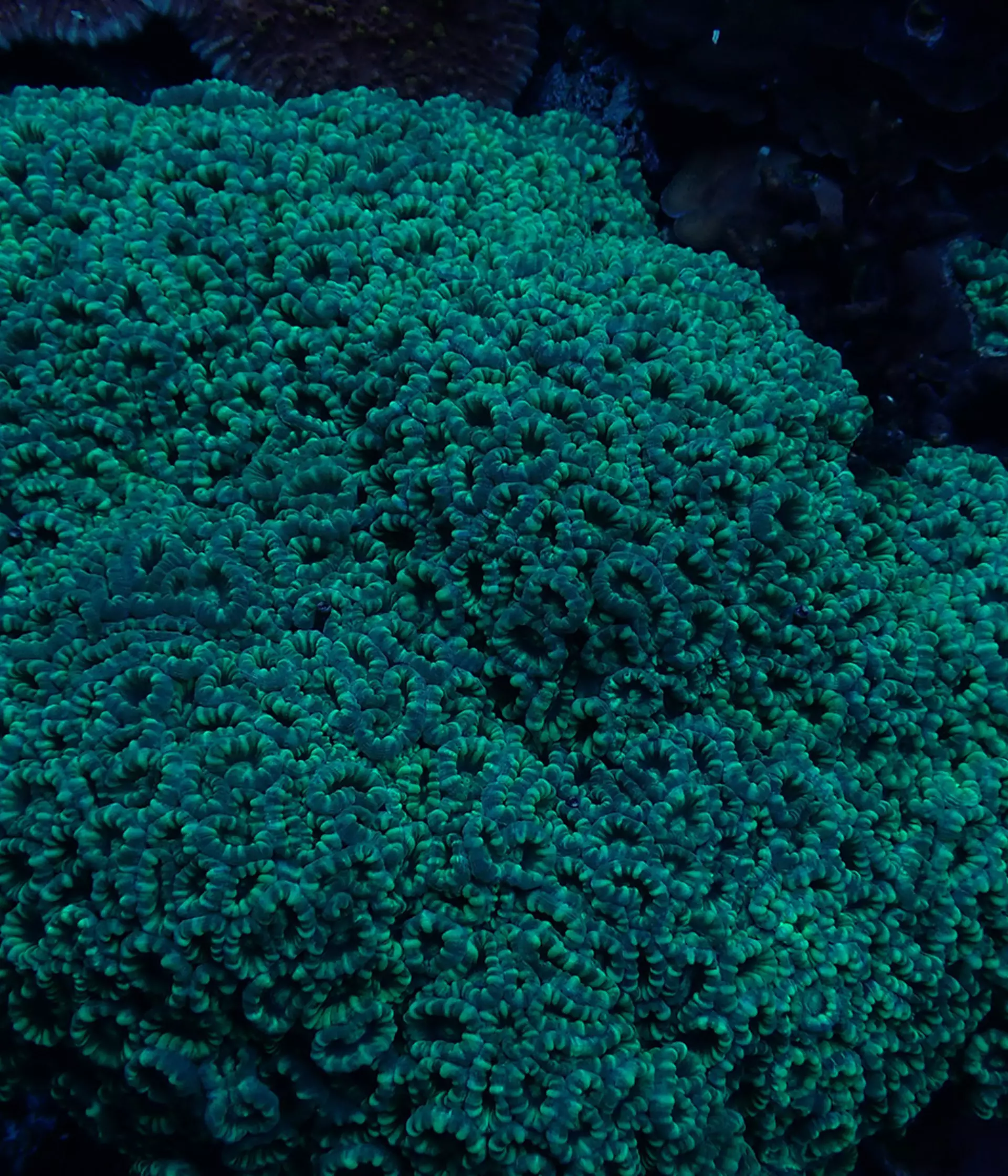
About candycane coral
- This species forms strands in partially sandy areas of reef, occasionally up to five metres across.
- The corals can be found in a variety of colours, due to algae (known as ‘zooxanthellae’) which live within their tissue.
- Using this algae, the coral generates most of the nutrients it needs through photosynthesis. Despite this, these corals are still animals and not plants!
How do corals get their colour?
Most tropical corals get their food and magical colours from their best friends, single-celled algae living inside their structure, called zooxanthellae. These algae photosynthesise and pass most of the food they make to the corals themselves. In turn the corals provide a safe shelter for these teeny algae to thrive.
Together, the coral and zooxanthellae create all of the incredible coral reef colours.
What is a coral?
Believe it or not, corals are animals! They might look like rocks or plants, but they are actually living, moving, feeding invertebrates.
An individual coral, called a polyp, looks a bit like an upside-down jellyfish (complete with stinging tentacles). Each polyp builds a hard cup to sit inside, usually made of calcium carbonate, and fixed to the ocean floor.
Many corals live together as a colony, Their hard cups fuse together into a single structure growing larger as they multiply. These corals grow over hundreds of years eventually forming a reef.


London Zoo newsletter
Get the latest updates about exciting animal news from the Zoos, upcoming events, experiences, offers