

Area of zoo
Enclosure status
Open
IUCN status
Endangered
Scientific name
Bitis parviocula
Order
Squamata
Type
Reptiles
Family
Viperidae
Region
Endemic to the highlands of SW Ethiopia
Habitat
Forest
Ethiopian mountain adder facts
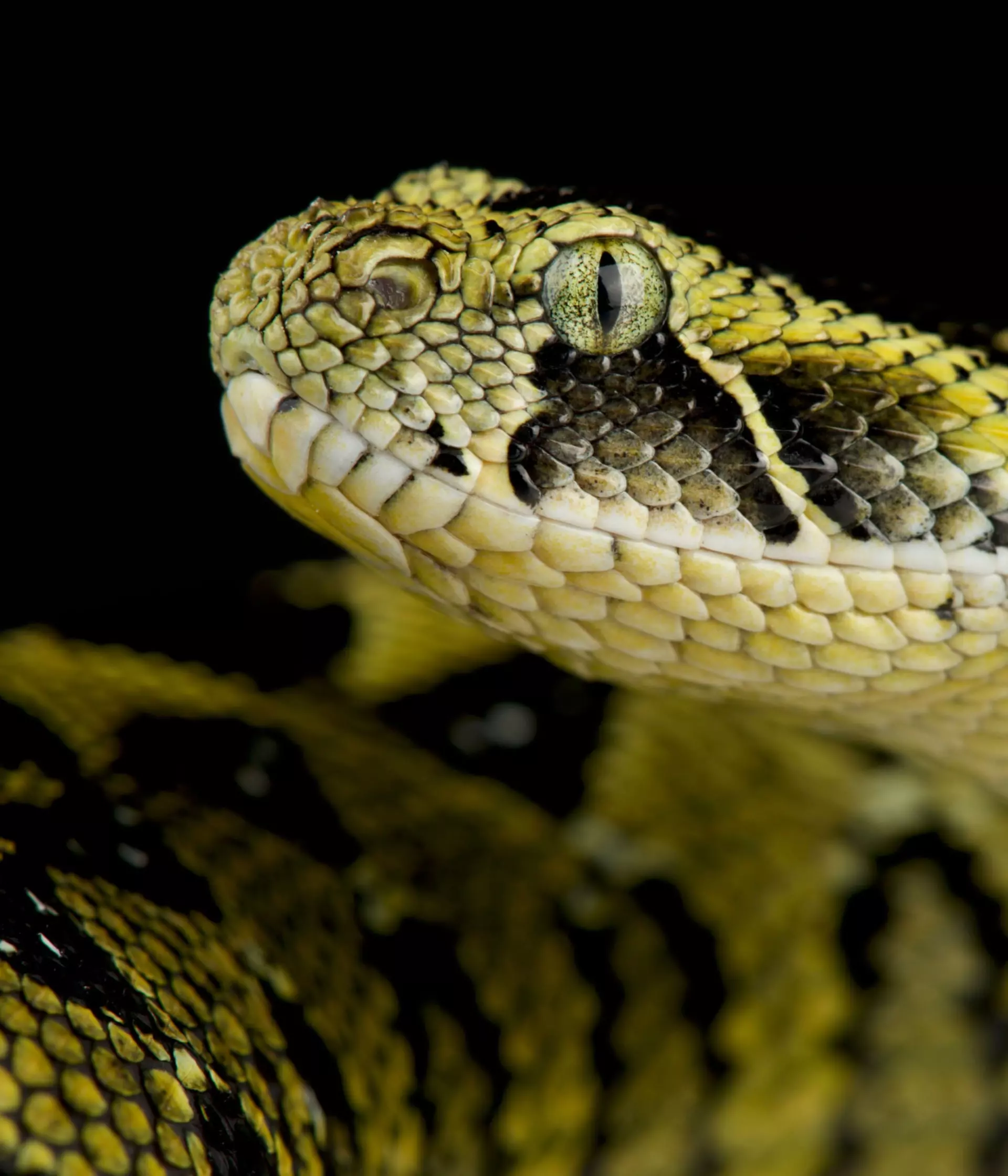
The Ethiopian mountain adder, also called the Ethiopian viper, is a venomous snake found only in the wild in the highlands of Ethiopia. Little is known about the Endangered species, but we do know that they are viviparous, meaning that they give birth to live young rather than laying eggs.
Are there Ethiopian mountain adders at London Zoo?
London Zoo is home to three Ethiopian mountain adders in the Secret Life of Reptiles and Amphibians habitat.
What do Ethiopian mountain adders look like?
These snakes are heavy bodied with distinctive highly contrasting black and yellow patterns that help with camouflage. They grow to about 1m long.
What threats do Ethiopian mountain adders face in the wild?
Ethiopian mountain adders are found at elevations suited to growing coffee so they’re threatened by habitat loss to support that industry. Climate change could also impact this species.
Agricultural expansion and logging continue to reduce the quality and extent of the species’ only known habitat in the wild.
How is ZSL working to protect Endangered Ethiopian mountain adders?
The species has been identified as an EDGE reptile. This means we recognise that the Ethiopian mountain adder is unique, extraordinary, overlooked, under threat, and in great need of being protected.
At London Zoo, we achieved the first EAZA breeding of this snake in 2021 and coordinate the EAZA Ex situ Programme (EEP) for the species, with the aim of maintaining healthy and thriving populations of the animals within EAZA and beyond.
We have supported several student projects looking at the species' ecology and traits. We have also trained an EDGE Fellow working on a related species in Kenya how to do this too, demonstrating how tools developed in our zoos can be directly applicable to monitoring and conserving threatened species in situ.

Reptiles at London Zoo

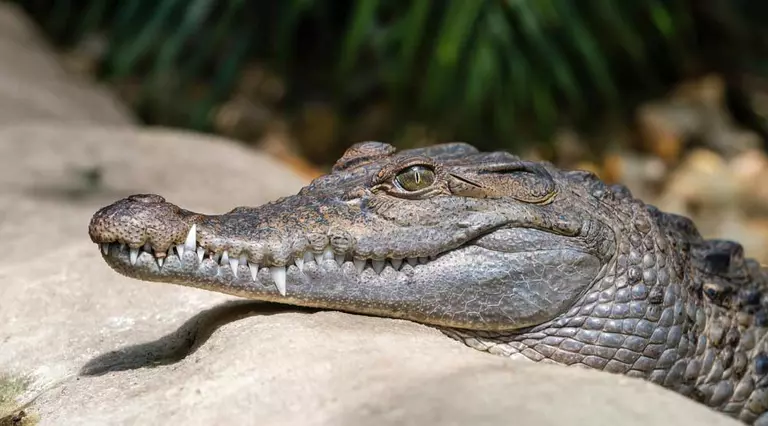
The Secret Life of Reptiles and Amphibians
A hub for science and conservation
Delve into the secretive habits of these remarkable animals as they blend expertly into their environments – hidden in leaves and branches or just beneath the water’s surface.

Animals in your inbox
From the fresh pitter patter of tiny feet to massive new arrivals, get the latest Zoo news straight into your inbox.