
Can I see armadillos at London Zoo?
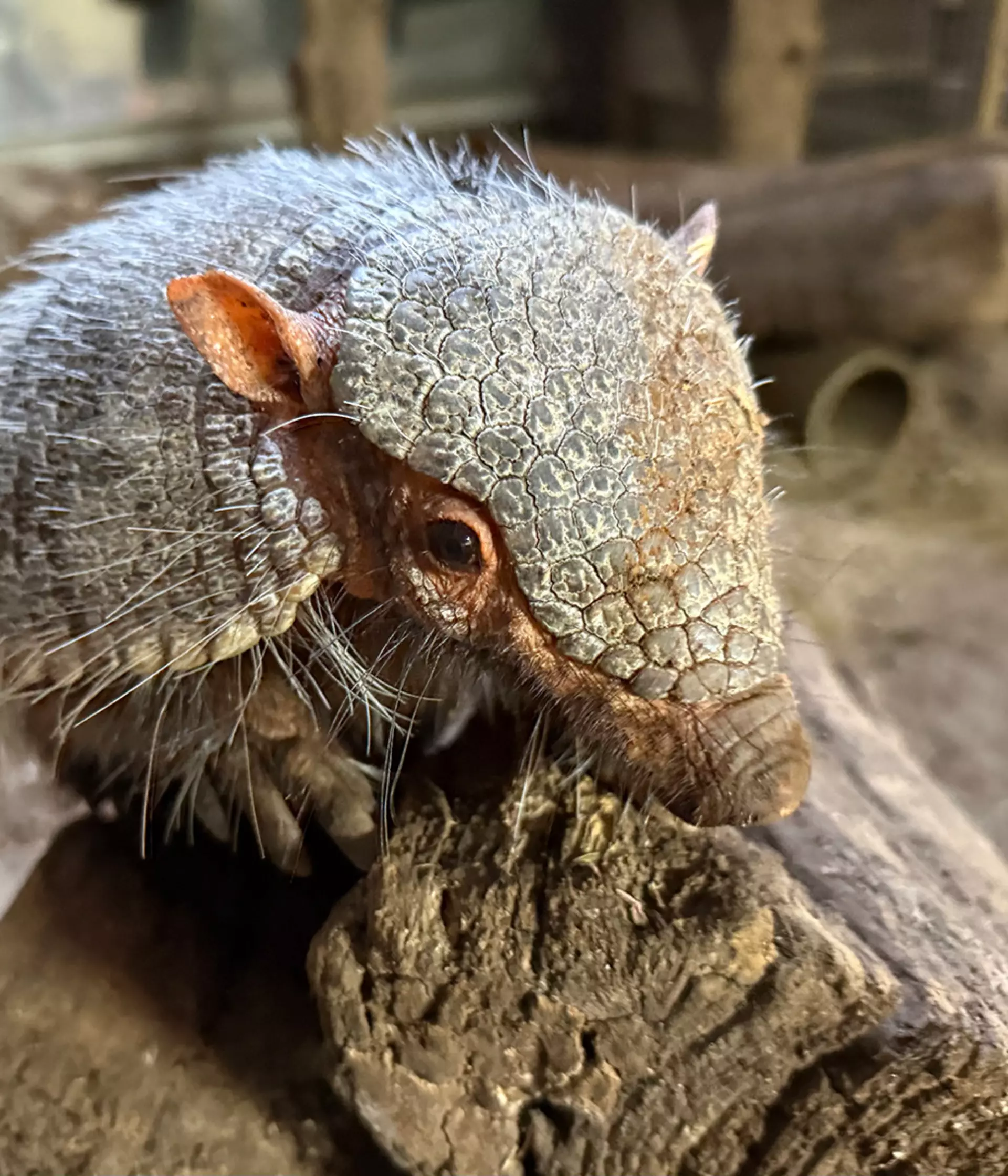
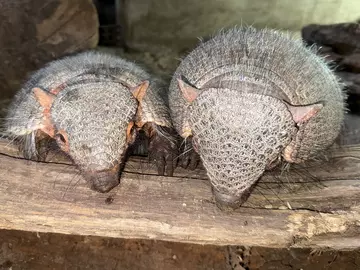
London Zoo is home to two large hairy armadillos, Jack and sister Marion. They can be seen as part of our Super Species Live demonstration.
Five facts you didn’t know about armadillos
- There are thought to be 21 different species of armadillo, all of them found in the Americas, including South, Central and the North American border.
- Armadillos are related to sloths and tamanduas - they all belong to the superorder Xenarthra.
- Armadillos are either nocturnal (mostly active at night), or crepuscular (active at dawn and dusk). This helps them to avoid predators and extreme weather.
- Their shell is covered in keratin, the same material as your fingernails, which is a really hard substance so helps to protect them from threats.
- It’s a myth that all armadillos can roll into a ball. Only one of the species can do this, the three-banded armadillo. Instead, if they feel threatened, armadillos will run into one of their burrows.
What do large hairy armadillos look like?
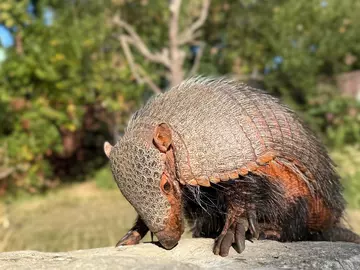
Like all armadillos, they have thick bony plates covering their head, neck and body, which act as a natural armour to protect them from predators.
As the name suggests, they are hairier than other species of armadillo. Their hair covers their stomachs and limbs and protrudes from between their bony plates.
How are large hairy armadillos adapted to their environment?
Large hairy armadillos have strong legs and large claws, making them excellent diggers. They dig burrows for shelter, to find food, and to escape predators, including canines and birds of prey.
They have special membranes in their nose allowing them to breathe underground without inhaling soil.
While these animals have poor eyesight, they make up for it with their sense of smell to find food and detect danger. They also use their wiry hairs to sense their surroundings.

What do large hairy armadillos eat?
Large hairy armadillos are omnivores with a varied diet. They feed on ants, worms and other invertebrates that they forage for by digging in the ground. And they’ll also eat small vertebrates, carrion, plant material and fruit and vegetables.
Where do armadillos live?
Large hairy armadillos have a wide distribution in South America, and are well-adapted to live in a varied habitat of grasslands, savannas, and forests.
What threats do armadillos face in the wild?
Large hairy armadillos are categorised as Least Concern on the IUCN Red List, but the species faces threats of habitat destruction and hunting. Dried armadillo shells are traditionally used to create musical instruments called Charangos. They can also be killed as a pest species, or are sadly hit by vehicles as they try to cross roads.
When the armadillos feel threatened, they draw their feet under their body, and flatten their body to the ground, leaving only the armour exposed.


A pangolin (left) and a large hairy armadillo (right)
What’s the difference between pangolins and armadillos?
Armadillos are often confused with pangolins, but they’re actually very different. Pangolins have scales instead of bands – they’re the world’s only scaly mammal! They're also the most illegally trafficked mammals in the world, and some pangolin species are on the brink of extinction.
London Zoo is part of ZSL, an international science-driven conservation charity. We're working to protect pangolins and their habitats in the wild. Every visit to London Zoo, a conservation zoo, helps to support our work for wildlife around the world.

London Zoo Newsletter
Get the latest updates about exciting animal news from the Zoos, upcoming events, experiences, offers