
Sengi facts
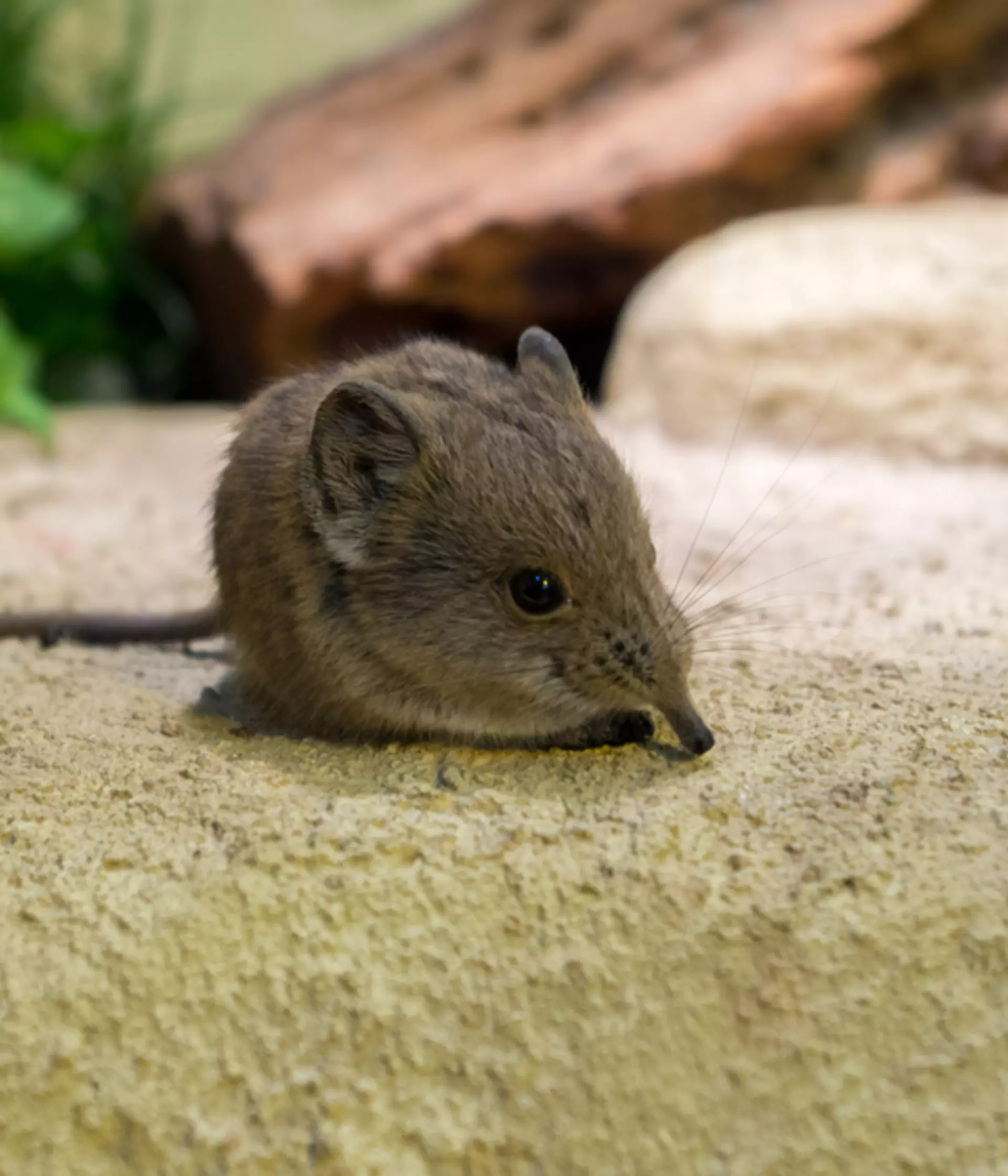
London Zoo is home to a female round-eared, or short-eared, sengi. Look out for her in our Rainforest Life habitat.
- Sengis, also known as elephant shrews, look like rodents, but they are actually more closely related to elephants!
- There are around 20 recognised species of sengis. At London Zoo, we're home to black and rufous sengis as well as round-eared sengis.
- Sengis only give birth to one or two babies at a time. The babies are up and running very quickly after birth. They need to be able to keep up with mum and she will move them around her territory making sure they are sheltered from predators such as lizards and hawks.
- Despite being widespread and highly active during the day, sengis are very difficult to find in the wild, needing cover from predators such as birds of prey!
- Sengis are one of the fastest small mammals, having been recorded to reach speeds of 29 kilometres per hour (18 mph).
- Female sengis undergo a menstrual cycle similar to that of human females and the species is one of the few non-primate mammals to do so. Sengis were even used in the 1940s to study the human menstruation cycle!
- In 2020, the Somali sengi was rediscovered in Djibouti after having been ‘lost’ in the wild for over 50 years!

What do sengis look like?
As the name suggests, London Zoo's round-eared sengis, also known as short-eared sengis, have shorter and rounder ears than other sengis, or elephant shrews. They are the smallest of all sengi and can fit into the palm of your hand, but most sengi are much larger. The biggest sengi weighs around 700g, around the same weight as a Guinea pig.
Where are sengis from?
Sengis live all across Africa, apart from the Sahara desert. Our short-eared sengi live in southern Africa in Namibia, Botswana and South Africa.
What do sengis eat?
They typically eat insects, such as termites and ants, as well as plants, roots, shoots and berries.
What threats do sengis face in the wild?
Pressures from human encroachment destroying habitat – such as farming livestock which clears ground cover and tramples territory sengis use to build their tracks.
Forest fires which are becoming more frequent due to climate change.