

Five coati facts
- There are four species of coati, a medium-sized carnivore from the same family as the racoon.
- Coatis are largely diurnal, meaning they are active in the day.
- They spend much of their time foraging in trees and on the ground.
- London Zoo is home to a male white-nosed coati called Klaus. Look out for him in the Animal Adventure area of the Zoo.
- Adult male coatis are typically solitary animals, except during breeding season.
What do white-nosed coatis look like?
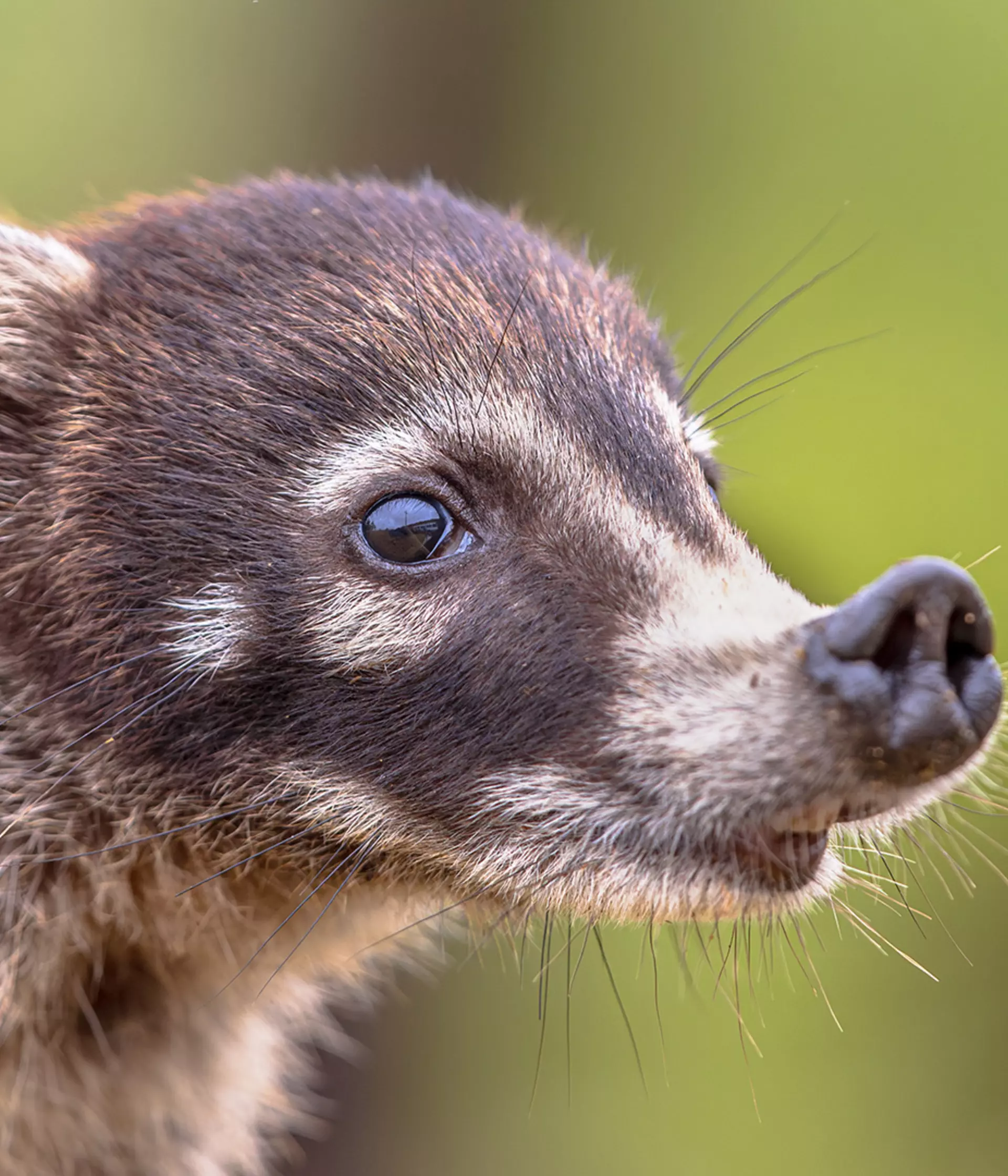
White-nosed coatis are reddish brown / black in colour with lighter underparts. Their face has black and grey markings with a white spot above and below each eye, on each cheek and around the end of the muzzle.
They have strong claws for digging and long, highly mobile snouts so they’re well-adapted for foraging in crevices to find food. They also have a thick, semi-prehensile tail, which is used for balance as they walk across branches.
What do white-nosed coatis eat?
As opportunistic feeders, coatis are omnivores. They eat a variety of things including fruit, invertebrates, small rodents and lizards. They typically forage for food on the ground and occasionally in trees.
What threats do white-nosed coatis face in the wild?
Coatis are currently classified as Least Concern on the IUCN Red List, but the population trend is declining. They face threats including habitat destruction, persecution by farmers and landowners.

London Zoo Newsletter
Get the latest updates about exciting animal news from the Zoos, upcoming events, experiences, offers