
24 September 2025
London Zoo Vets organise full health checks for our silverback gorilla.
Silverback gorilla Kiburi, the 21-year-old patriarch of our western lowland gorilla troop, was given an initial clean bill of health this week – following a mighty trip to the vets for a full health check.
The 177kg primate had been under observation after contending with recurrent gastrointestinal issues, leading our Zoo’s expert veterinary team to decide that they needed to take a closer look at him, with the help of a CT scan and both veterinary and human health specialists.
Before his full health check could take place, Kiburi had to be anaesthetised – which was done with an injection in his upper arm. This seemingly simple procedure took months of planning to achieve, with Kiburi taking part in frequent training with our zookeepers and veterinary nurses, so that he would offer his arm for the anaesthetic to be administered.
Once anaesthetised, Kiburi was first given a full cardiology examination in the back dens of his Gorilla Kingdom habitat with zoo vets supported by cardiologists from the Royal Veterinary College. Monitoring heart health for any animal is important, and provides the opportunity to assess their overall wellbeing.
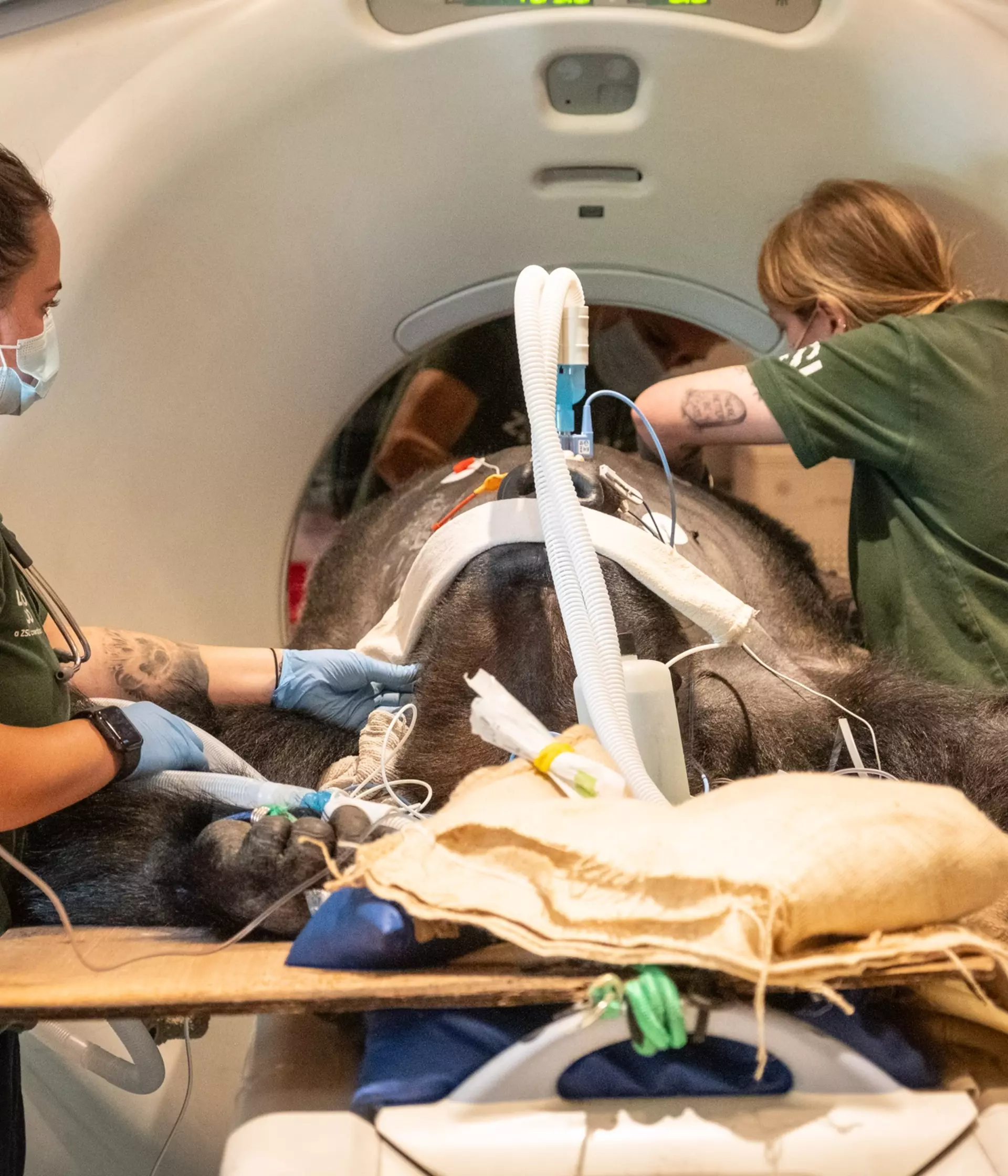
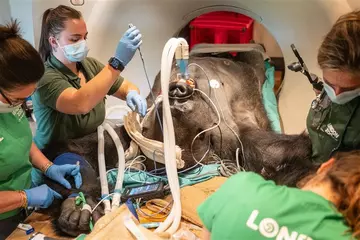
Once this was completed, it was time to get Kiburi to the CT truck. It took six people to heave the ape onto a gurney, before he had to be driven on a five-minute journey through the zoo on a flatbed truck to the CT scanner, surrounded by vets and nurses monitoring him the whole way.
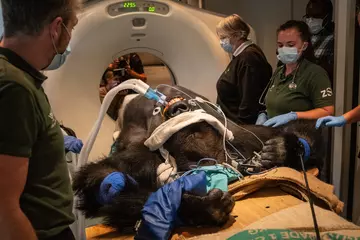
The CT scanner – a huge piece of machinery – had to be hired in, with Burgess Diagnostics Mobile CT Service wheeling their 44-feet long truck into the Zoo’s grounds, ready for Kiburi’s check-up. The scan, which was focussed on Kiburi’s abdomen, revealed no obvious cause for concern, a diagnosis supported by doctors from the NHS who specialise in gastrointestinal health and imaging, and provided unique assistance for Kiburi’s procedure.
Our Head of Wildlife Health Services, Amanda Guthrie, said: “We monitor all our animals very closely to ensure they’re getting the best care possible, so when we saw that Kiburi was having stomach issues, we wanted to make sure everything was working as it should.
“Thankfully, the silverback's initial test results have all come back as normal. Kiburi is back with his family at the Zoo’s Gorilla Kingdom habitat – including his two infant daughters, Juno and Venus.
“Having been able to get a closer look at how he’s doing, it’s good to see that these initial results show nothing of concern – and it helps us put together a monitoring plan so we can continue to make sure he feels his best.”
Our expert vets and nurses here at ZSL London Zoo commit every day to provide extraordinary care to our resident animals, including many species that are critically endangered in the wild.
Support the work of ZSL’s extraordinary vets with a visit to our conservation Zoo. Opening this autumn is ZooTown, a miniature zoo-within-a-zoo featuring a replica vet hospital for your wannabe vets to practice their own animal procedures.