
Event type
Experience
Event status
Open
Dates
1 June - 31 December
Price
Included in Zoo entry
Accessibility
This event is fully accessible.
Discover ZSL's Zoo Plaque Trail
As part of ZSL's 200th anniversary celebrations, our Zoo Plaque Trail celebrates the exceptional people, beloved animals, and even fictional characters who have played unforgettable roles in ZSL history.
Dotted throughout the Zoo, these distinctive plaques mark the spots where history was made – from groundbreaking scientific discoveries to moments of pop culture magic. Spot the plaques and read more about the people and animals behind them below.
Who are we celebrating along the trail?
Pioneers of their time
- Sir Stamford Raffles – ZSL's visionary founder devoted years to establishing the Society to advance zoological science. Though he served as ZSL's first President for only a few short weeks before his death in 1826, his legacy launched the world's first scientific zoo.
- Joan Procter – ZSL's first female Curator of Reptiles was a revolutionary force in herpetology. She designed the iconic Reptile House (now home to Zoo Town) and transformed how reptiles were understood and cared for. She dispelled old-fashioned myths and pioneered modern approaches to welfare and veterinary care - including installing UV glass in tanks. Becoming a global authority on reptiles by her mid-twenties, she passed away aged just 34 in 1931.
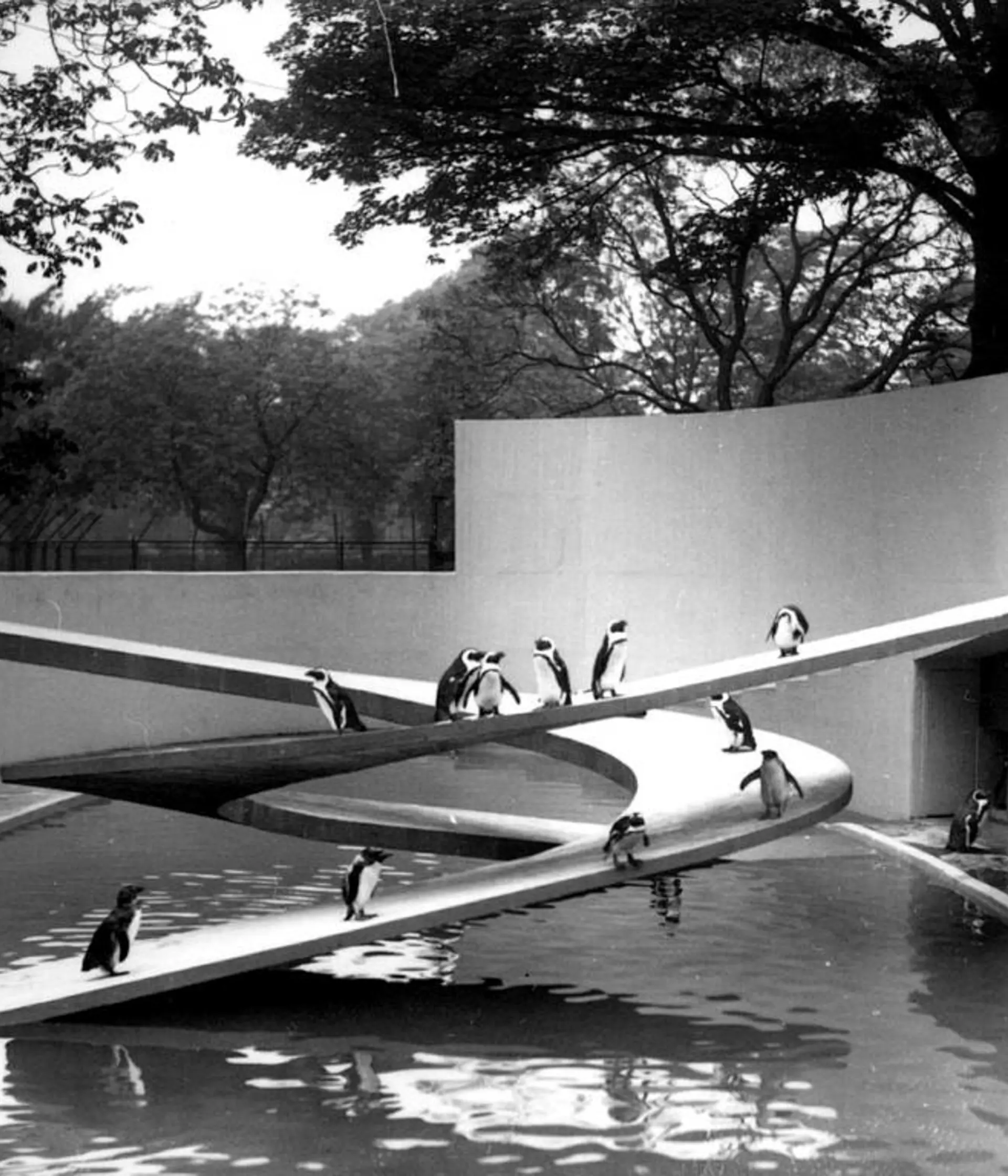
- Sir Peter Chalmers Mitchell – As ZSL's Secretary from 1903 to 1935, he revolutionised zoo design, bringing people closer to animals than ever before. He commissioned the iconic Lubetkin Penguin Pool, championed female staff, and conceived Whipsnade Zoo as the UK's first open-air animal park.
- Dame Georgina Mace – A trailblazer who became the first female Director of Science at ZSL's Institute of Zoology. Among her many contributions to wildlife, she co-created the IUCN Red List criteria with Russell Lande – the system conservationists worldwide still use today to assess species' extinction risk.
Charles Darwin – The father of evolution and ZSL Fellow visited Jenny the orangutan here as part of his research in 1838. This was the first time he’d seen an ape and Jenny made quite the impression on him. He was fascinated by her human-like emotions and reactions. His observations at the Zoo contributed to his revolutionary theory of evolution.
- Sir David Attenborough's career in front of the camera began at ZSL, when the star of a 1954 BBC wildlife series he was producing fell ill and he had to step in to present. That series was called Zoo Quest, and it was about London Zoo curator Jack Lester travelling the world to collect animals. It was Lester who fell ill, unwittingly launching the career of the world’s most beloved wildlife presenter.
Keepers and carers
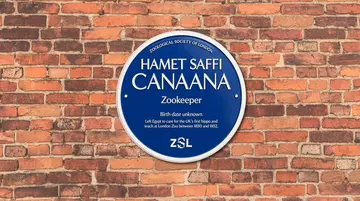
- Hamet Saffi Canaana – In the 1850s, this Egyptian zookeeper left his home and family to settle Obaysch the hippo into London Zoo, teaching staff how to care for the UK's first resident hippo and advancing wildlife science in the process. Obaysch became a national celebrity, dubbed HRH - His Rolling Hulk - by the media, and Hamet remained by his side for more than two years.
- Oliver Graham-Jones – ZSL's first full-time veterinary office (1951-1966) dedicated his life to animal care with remarkable ingenuity. He created the existing veterinary hospital here, the first purpose-built zoo vet hospital in Europe, and also invented the dart gun or ‘flying dart’ to deliver anaesthetic to animals from a safe distance. He famously saved a raven at the Tower of London – which ZSL has long been responsible for – by fitting it with a wooden leg.
Creative spirits
- Edward Lear – Before he became famous for his nonsense poetry, young Edward began his career as a zoological illustrator, drawing the parrots in the Parrot House and entertaining children with tales of mythical animals.
- Beatrix Potter – The beloved author and illustrator was a frequent visitor who fed the elephants buns and found endless inspiration among the animals. Many of her private letters to friends and family featured delightful sketches of London Zoo's residents.
Animal magic
- Guy the Gorilla – This gentle giant captured the nation's heart from 1946 to 1978, becoming one of London Zoo's most beloved residents. Named Guy because of his arrival on Guy Fawkes night - clutching a small tin hot water bottle - he was known for his quiet affinity with nature, often holding out his hand for birds to rest on. A statue commemorating Guy also sits at the Zoo's main entrance.
- Chi Chi the Panda – A celebrity in her own right from 1954 to 1972, Chi Chi became the inspiration for the WWF logo, symbolising conservation worldwide.
- Obaysch the Hippo – When he arrived in 1849, Obaysch sparked 'Hippomania' in Victorian England. Dubbed "HRH" (His Rolling Hulk) by the media, he was the UK's first resident hippo and became the most famous animal in the country.
- Winnie – This very famous bear, who lived at London Zoo from 1914 to 1934, had a special bond with a young visitor named Christopher Robin Milne, who named his teddy after her. This inspired his father, A.A. Milne, to create the beloved character Winnie-the-Pooh.
- Rota the Lion – Winston Churchill's lion served as the nation's mascot during WWII and lived at London Zoo from 1940 to 1955. During the war, the Zoo was asked to remain open for public morale, and supported the local community with education initiatives such as how to care for chickens for their eggs. In return, people gathered acorns for some of the animals during food shortages.
- Clarissa the Carp – At 44lbs, Clarissa was the largest carp ever recorded when caught in Ross-on-Wye in1952. This single catch is considered the most important event in carp-fishing history, paving the way for modern angling. Clarissa lived in the Zoo's Aquarium until 1972.
Pop Culture Moments
- Harry Potter – The Reptile House features in a pivotal scene from Harry Potter and the Philosopher's Stone, and is where Harry first discovers he can speak Parseltongue (1997). The first film in the wizarding series broke records at the Box Office. The tank was actually home to a black mamba at the time, not a Burmese python with Slytherin tendencies that we were led to believe. Though the Reptile House is now home to role play experience Zoo Town, you can still catch a selfie in front of the tank in our recreation of the scene - to the right of the building.
- Richard E. Grant – The iconic actor performed Shakespeare's Hamlet for the wolves on this very spot during filming of the cult classic Withnail & I (1987). In one of the most iconic end scenes in British cinema, a drunk and sodden Withnail staggers to what was then the wolf enclosure and belts out 'What a piece of work is man!'. Legendary. Though the wolves remained nonplussed.
- Harry Styles – The singer danced here in the iconic Grade I listed Lubetkin Penguin Pool for the music video for his hit single As It Was (2022).Built in 1934 and designed by the visionary Berthold Lubetkin, it's gravity defying interlaced spiral ramps were revolutionary and its stark walls made the perfect backdrop for Harry's sequinned red trousersuit. Styles clearly knows good architecture when he sees it.
- Count Dracula – Bram Stoker's famous vampire gave the wolves quite a shock on his visit to the Zoo in his 1897 novel - where a wolf named Berserker mysteriously escapes after being compelled by Dracula to do his dark bidding. Stoker was writing at the height of the Victoria era, when we were the most exotic address in town. Using such a landmark location helped signal Dracula’s arrival in London and his influence over animals and the natural world.
- The Beatles – In 1963, the then unknown band were recording at the nearby Abbey Road Studios and their manager asked to shoot the cover of their first album in front of our Insect House. We said no. We have so many regrets.
Acknowledging unheard voices
You'll find one plaque that bears no name. It represents the countless hidden voices who contributed to ZSL's history, but whose names were never recorded or celebrated. From local guides and collectors on expeditions to animal carers and knowledge sharers, many people – particularly during Britain's colonial past – made essential contributions but were never named in the official record. This plaque acknowledges that our understanding of the natural world has always been a shared endeavour, shaped by diverse communities, cultures, and perspectives whose legacy continues to shape conservation today.
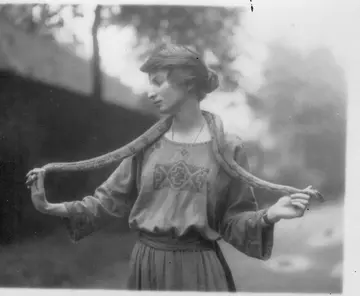


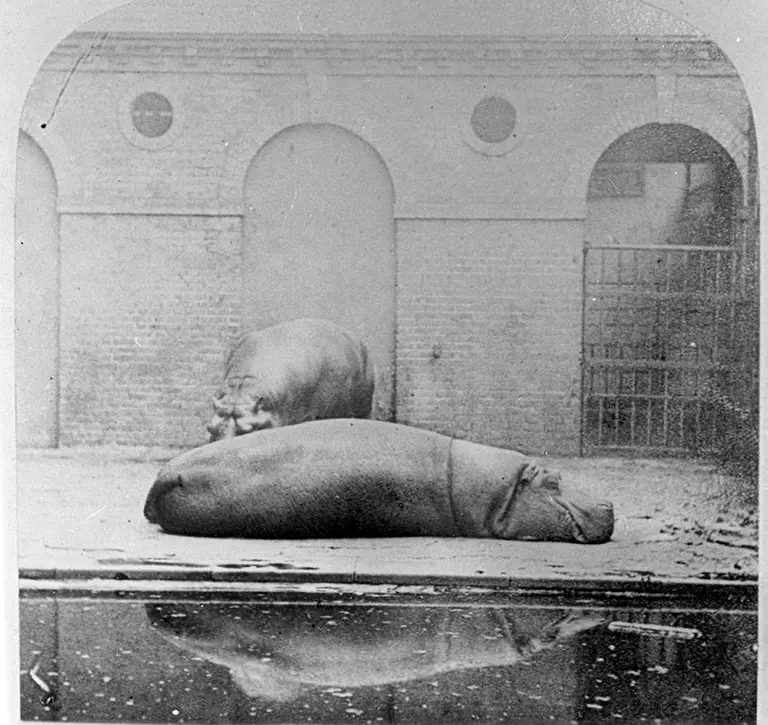
Joan Procter, Guy the Gorilla and Obaysch the Hippo
200 years of wildlife and wonder
Join in with events, explore stories from our history, get lost in podcasts and oral histories, and take on our quizzes.


ZSL at 200
Delve deeper into our rich heritage with our brand new, interactive exhibition in the heart of London Zoo.

London Zoo newsletter
Get the latest updates about exciting animal news from the Zoos, upcoming events, experiences, offers