
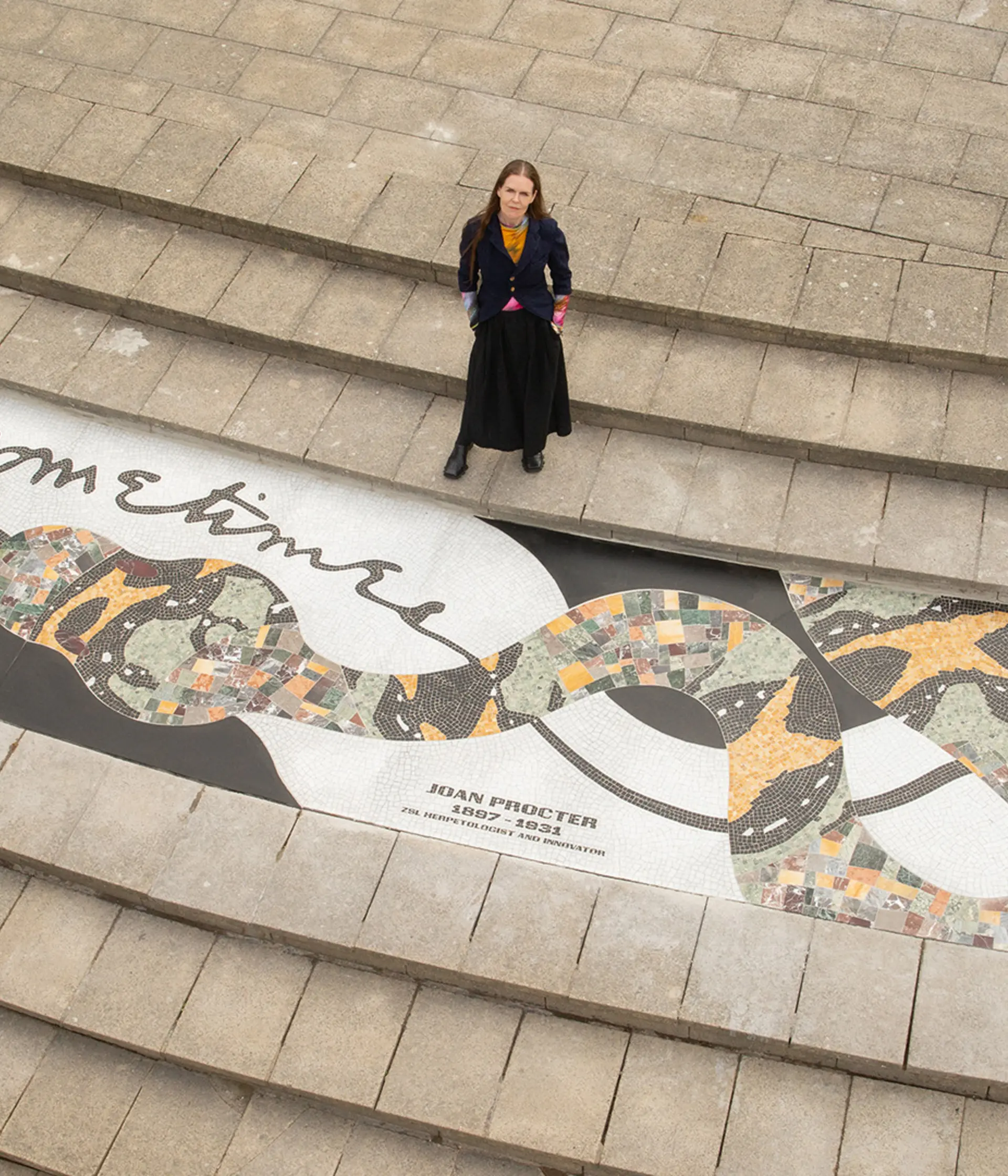
Created at London Zoo to mark ZSL's 200th anniversary in 2026, Sirona is acclaimed artist Linder's first permanent public artwork and first-ever mosaic.
Inspired by the remarkable life of pioneering zoologist Joan Beauchamp Procter (1897 – 1931) - our first female curator of reptiles - the 16-metre marble and galaxy granite mosaic celebrates curiosity, science, conservation, and the important relationship between people and wildlife.
A lasting legacy
Sirona stands as a lasting legacy of our 200th anniversary year in 2026. It began its life with an invitation to acclaimed British artist Linder to respond freely to our extraordinary history. The result is a monumental artwork that brings together art, science, history, conservation and community.
Curated and managed by the Contemporary Art Society *Consultancy, and generously supported by the Pears Foundation, Sirona invites visitors to reflect on our past while looking ahead to the future of wildlife conservation.
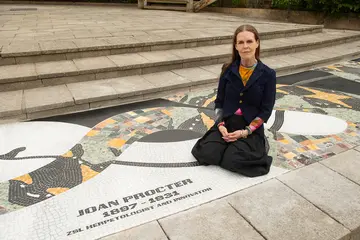
Meet the artist
Linder is one of Britain's most influential contemporary artists.
Emerging from Manchester's punk and post-punk scene in the 1970s, she became internationally recognised for her pioneering photomontages, photography and performance work, exploring identity, power and representation.
Working with vintage printed images, Linder has spent decades carefully cutting and reassembling fragments using scissors and scalpels to create entirely new works. Today, her art is held in major collections including Tate, the Victoria and Albert Museum and the Museum of Modern Art (MoMA) in New York.
Linder approached the commission with her characteristic curiosity, immersing herself in our remarkable past before discovering the story that would become the heart of Sirona.
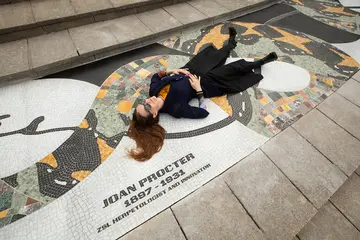


The woman who inspired the artwork
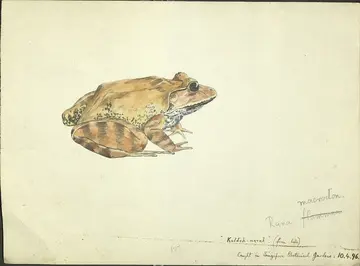
As Linder explored the ZSL Prince Philip Zoological Library & Archives, one remarkable figure emerged: Joan Beauchamp Procter.
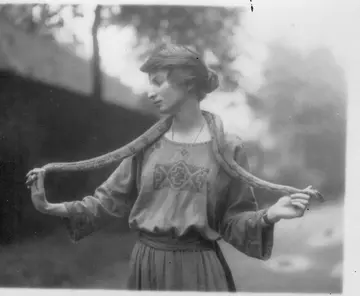
Born in 1897, Joan was one of the most gifted zoologists of her generation. She presented her first scientific paper to ZSL aged just nineteen and, at only 26, became London Zoo's first female Curator of Reptiles and Amphibians.
Influential women in ZSL's history
At a time when reptiles were widely feared and misunderstood, Joan transformed the way they were cared for, studied and understood. Reptiles were largely stigmatised as cold, unfeeling and unintelligent animals, but Joan changed public perceptions and attitudes. She pioneered innovative reptile habitats that recognised the importance of UV light, devised new veterinary equipment to care for the animals, oversaw the arrival of the UK's first Komodo dragons for scientific study and designed our iconic former Reptile House.
She also helped design Whipsnade Zoo and London's historic zoo entrance, both of which still bear her influence today.
Despite becoming internationally renowned during her lifetime, Joan died tragically young aged just 34 and, over time, her remarkable achievements faded from public memory.
In Joan, Linder recognised a kindred spirit – a pioneering woman whose originality, determination and curiosity challenged expectations in her own field. Through Sirona, her extraordinary legacy is brought back into the spotlight.


Creating Sirona
Over two years, Linder immersed herself in our archives and those at Girton College, Cambridge, where Joan's sister’s personal papers are held.
She met our scientists, zookeepers and educators, visited the animals in their care and learned about the conservation work taking place across ZSL today.
The project also reached far beyond the archives.
Creative workshops at both our conservation Zoos invited schools and community groups to explore themes of wildlife, empathy and conservation. Those workshops became part of the artwork itself: the elegant winding form of the snake was even inspired by a photograph taken by one of the workshop participants, ensuring that community voices became central to the piece.


From photomontage to mosaic
Although Linder is celebrated around the world for her photomontages, Sirona offered an opportunity to work in an entirely new medium.
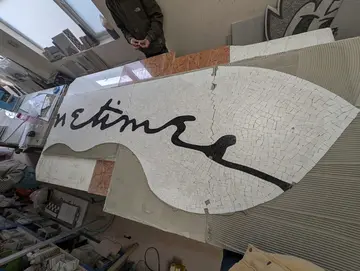
Creating a mosaic might seem very different to her usual work, but Linder quickly recognised striking similarities between the two practices. Both involve carefully selecting, cutting and placing thousands of individual fragments to create a single, unified image.
Instead of paper, Sirona is composed of approximately one million reclaimed marble tesserae, framed by black galaxy granite. Piece by piece, tiny fragments of stone replaced fragments of paper, echoing the precision and craftsmanship that have defined Linder's work.
To realise the commission, Linder worked closely with specialist fabricators Milestone Mosaic, who painstakingly created the mosaic, and Hooper Stonemasons Ltd, who installed the finished artwork. Together they selected eight different varieties of reclaimed marble for their colour, texture and durability, creating a permanent artwork for generations of future visitors.
Sections of the snake’s body evoke the display tables of the Victorian era, traditionally used to present marble and geological specimens, subtly referencing the scientific culture of our early days while honouring Procter’s contributions.



The snake at the heart of the artwork
At the centre of Sirona is an Ethiopian mountain adder.
This striking yet little-known species is classified as Endangered and is cared for by the herpetology team at our Secret Life of Reptiles and Amphibians exhibit.
Found only in the Ethiopian Highlands, the species faces threats from habitat loss and climate change. As an EDGE (Evolutionarily Distinct and Globally Endangered) species, it represents exactly the kind of unique wildlife that we work to protect.
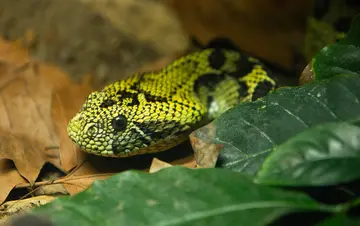
We achieved the first European breeding success for the species in 2021 and today coordinate the international conservation breeding programme.
By choosing this snake, Linder not only honours Joan Procter's lifelong fascination with reptiles but also shines a light on the conservation work taking place here today.
'Think of this sometimes'
Running through the mosaic are four simple words:
Think of this sometimes.
The phrase comes from a personal letter Joan wrote to her sister, Chrystobel, and is reproduced in the artwork using Joan's own distinctive handwriting. This letter is held in the Girton College Archive (GCPP Procter 5/2/2).
For Linder, these words became the emotional heart of the commission.
They invite us to pause, to reflect and to think differently about the natural world and our place within it.
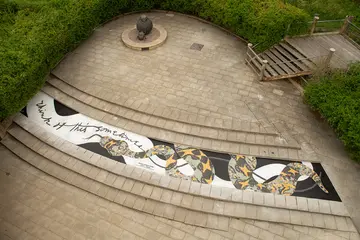
Just as Joan encouraged generations of visitors to replace fear with fascination, ‘think of this sometimes’ asks each of us to carry that curiosity home with us.
For everyone at ZSL, the phrase has taken on an even broader meaning. If we all think of wildlife – and of our shared responsibility to protect it – just a little more often, together we can make a real difference to nature’s future.
Why Sirona?
The artwork takes its title from Sirona, the Celtic goddess of healing, restoration and renewal.
The name reflects Joan Procter's own life, which was marked by chronic ill health even as she made pioneering contributions to zoology and reptile care.
It also speaks to our mission today. Just as Sirona represents healing, we work every day to restore wildlife, protect threatened species and create healthier ecosystems for future generations.
Linder was also drawn to the subtle snake-like sound of the name itself, echoing the Ethiopian mountain adder that winds through the mosaic.
Art and wildlife: a 200-year tradition
Since opening the world's first scientific zoo in 1828, we’ve inspired generations of artists, writers and creative thinkers.
Sir Edwin Landseer studied lions here before sculpting the famous lions in Trafalgar Square. Edward Lear sketched our parrots for science. Poet Laureate Ted Hughes found inspiration while working here. More recently, artists including Banksy, Louis Masai and Jane Mutiny have all contributed to our cultural story.
Sirona continues that rich tradition, showing how art can inspire curiosity, deepen our connection with wildlife and encourage people to care for the natural world.
The Unveiling
Sirona was unveiled on Thursday 2 July 2026 by five present-day ZSL conservationists who represent the many ways Joan's legacy lives on today – through science, animal care and the continued pursuit of knowledge that has defined ZSL for 200 years.
Dr Louise Gibson: As a ZSL scientist Louise represents Joan's pioneering contribution to zoological science – a spirit of curiosity and discovery that continues to drive our work today. Louise’s most recent project is focussed on using AI to identify snake species, to aid border agencies to identify those being illegally trafficked.
Curator of Mammals Sarah Forsyth: As one of our curators today, Sarah follows in Joan's footsteps, helping shape how we care for, understand and champion wildlife here at London Zoo.
Reptile keeper Ella Jones: As one of today’s reptile keepers, Ella continues Joan's lifelong passion for reptiles every day, caring for many of the animals that Joan dedicated her career to helping people better understand.
Head of Wildlife Services Dr Amanda Guthrie: As our head veterinarian, Amanda represents Joan's pioneering innovations in reptile healthcare and veterinary science – work that transformed the welfare of reptiles both here at London Zoo and far beyond.
Head of Conservation Education Cat Hickey: Cat represents the important work Joan did educating and connecting people to nature, something that is foundational to our work at at ZSL today.
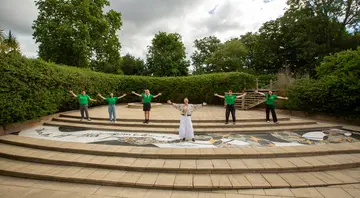


Visit Sirona
Sirona is now on permanent display at the Zoo, opposite Tiny Giants, in a space designed for gathering and resting a while.
Whether you're visiting to discover Linder's first permanent public artwork, learn about the remarkable life of Joan Beauchamp Procter or simply to enjoy a great day out at the world’s oldest scientific zoo, Sirona offers a unique opportunity to explore where art, science and conservation meet.
As you stand or sit beside the mosaic, take a moment to look closely, discover its hidden details and, in Joan's own words...
Think of this sometimes.
Book your tickets to London Zoo and experience Sirona for yourself.

200 years of ZSL

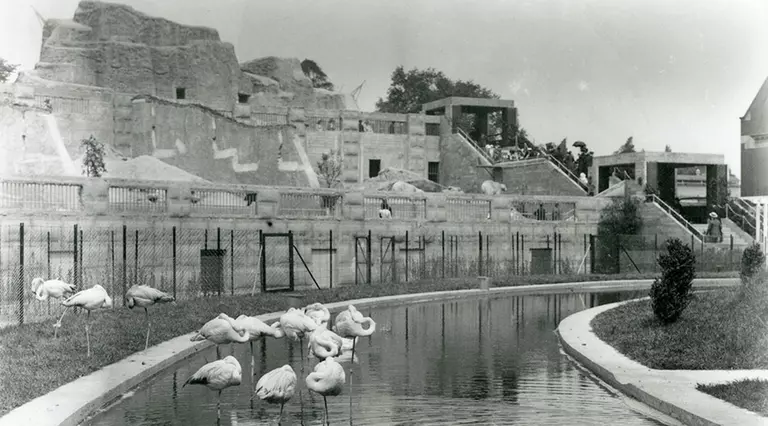
Celebrating 200 years of wildlife and wonder
2026 marks an extraordinary milestone: 200 years of ZSL. That’s two centuries of pioneering science, global conservation, and inspiring connections between people and wildlife.